KuCoin to delist Monero as XMR falls 10.5%
 Phuong-Linh Nguyen
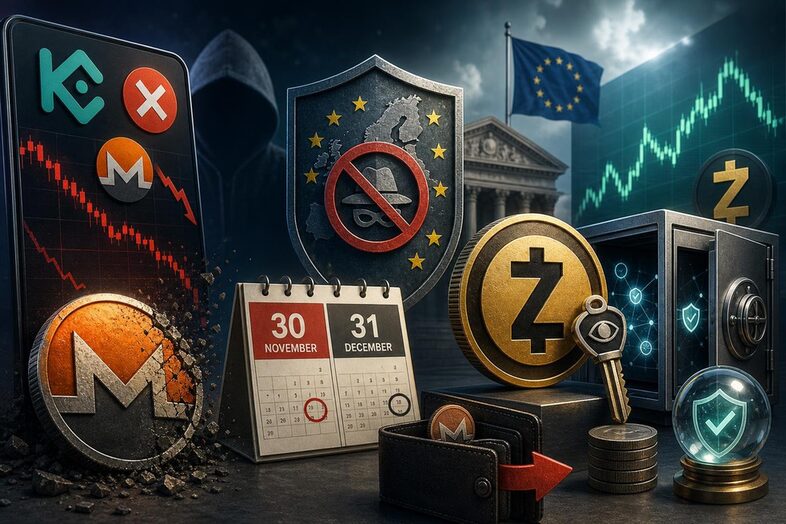
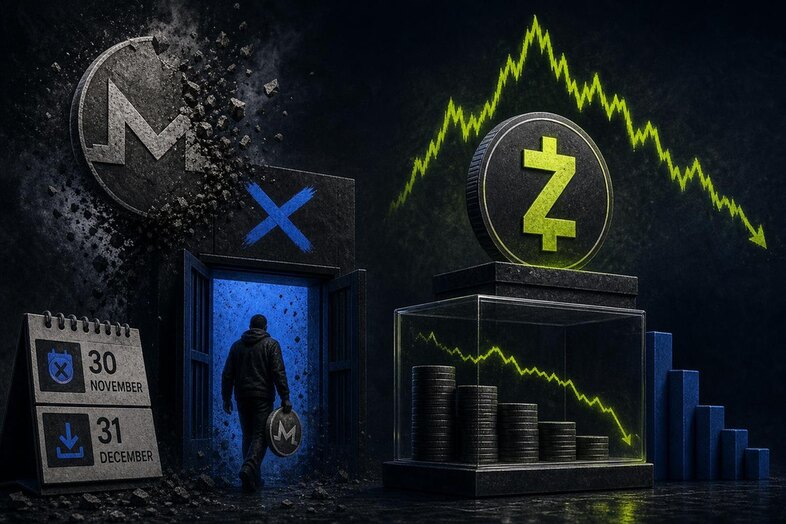
KuCoin will delist Monero (XMR) on 30 November, after suspending deposits in the privacy coin, while its price fell 10.5% to $449.98 by 07:00 UTC on Thursday. The decline extends a slide from about $625 on 3 November.
The exchange plans to stop withdrawals on 31 December. Customers holding XMR on KuCoin therefore face a deadline to move their coins before that service closes. The announcement makes KuCoin the second large platform to remove Monero this month: MEXC halted spot trading in XMR in early November, after previously delisting its perpetual futures contracts.
The exchange moves come as European Union rules set a future limit on how regulated financial firms can handle privacy-focused cryptocurrencies. From 10 July 2027, the bloc’s anti-money-laundering regulation will prohibit financial companies, including crypto-asset service providers, from maintaining anonymous accounts or accounts that obscure transactions through “anonymity-enhancing coins”. The restriction applies whether privacy features are built in or optional.
The rules will not prohibit individuals from holding privacy coins in self-custody wallets. But they could constrain access to those assets through regulated platforms. The regulation defines anonymity-enhancing coins as cryptocurrencies with features that can anonymise transaction data systematically or optionally, a scope that may include assets whose privacy functions users can choose to activate.
Different approaches to transaction privacy
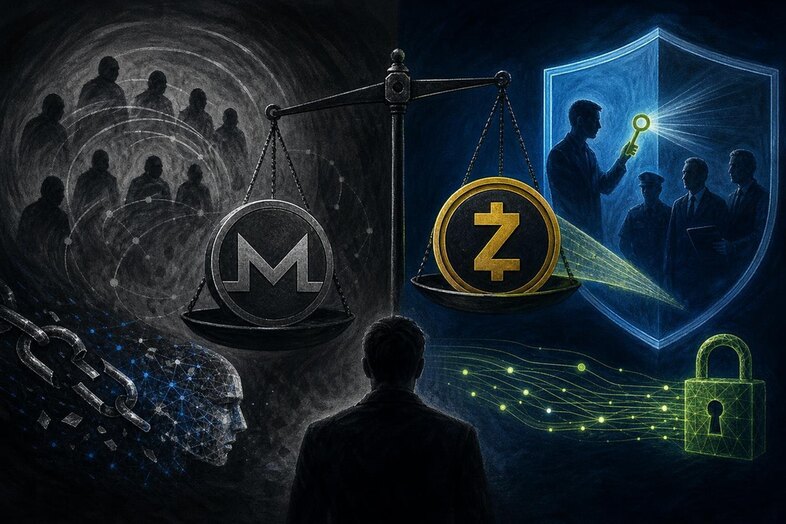
Monero, launched in 2014, hides transaction amounts and the wallet addresses of senders and recipients by default. Zcash (ZEC), launched in 2016, gives users a choice between transparent and shielded transactions. Both have faced regulatory scrutiny. Binance delisted Monero in 2024, and Kraken later that year stopped supporting it in the European Economic Area.
Zach Pandl, head of research at Grayscale, argued that Zcash is positioned differently from Monero. Grayscale has offered exposure to ZEC through its trust since 2017, and its Zcash product began trading on NYSE Arca on 25 August after the trust was converted. Pandl said the company’s commitment to Zcash would continue for many years.
He also pointed to Zcash’s viewing keys, which allow holders to disclose transaction information to an auditor, regulator or law-enforcement agency when required. Pandl said the feature gives users control over who can see their financial data. Whether viewing keys alone satisfy regulatory requirements remains contested.
Monero relies on ring signatures to obscure a transaction’s source among multiple possible signers. Pandl said that approach could become vulnerable as artificial-intelligence tools improve blockchain analysis and make it easier to connect pseudonymous addresses with information from outside the blockchain. Grayscale favours Zcash’s use of zero-knowledge proofs, which can verify shielded transactions without publishing sensitive details on-chain.
Monero’s developers are working on an upgrade intended to replace ring signatures with a zero-knowledge-proof system. The proposal indicates that the technology is not static, though KuCoin’s announced removal and the EU timetable concern the coin’s current availability on platforms.
Zcash price and fund assets retreat from peaks
Grayscale’s Zcash ETF reached $1 billion in assets under management on 24 September, then stood at $406 million on the Wednesday cited in the report. ZEC rose from $524 on 1 January to $1,653 on 26 September, more than tripling over that period, according to Token Terminal data. It more than doubled in the month after the ETF began trading, before retreating to $770. Despite that pullback, the coin remained about 50% higher year to date.
Pandl compared Zcash’s rise over the preceding year with a “Solana’s Bitcoin moment”, referring to Solana’s expanding market capitalisation and its challenge to Ethereum’s position as the leading smart-contract platform. He said ZEC’s market capitalisation was 1.2% of Bitcoin’s and described the coin as relatively undervalued, while adding that Grayscale had no price targets.
The fund offers exposure to ZEC, but investors who want to use the coin’s privacy features need to hold the cryptocurrency directly, Pandl said. That distinction separates the ETF’s potential store-of-value role from on-chain use. For Monero holders using KuCoin, the immediate dates are 30 November for delisting and 31 December for the planned end of withdrawals.