How blockchain is being used to strengthen cybersecurity
 Phuong-Linh Nguyen
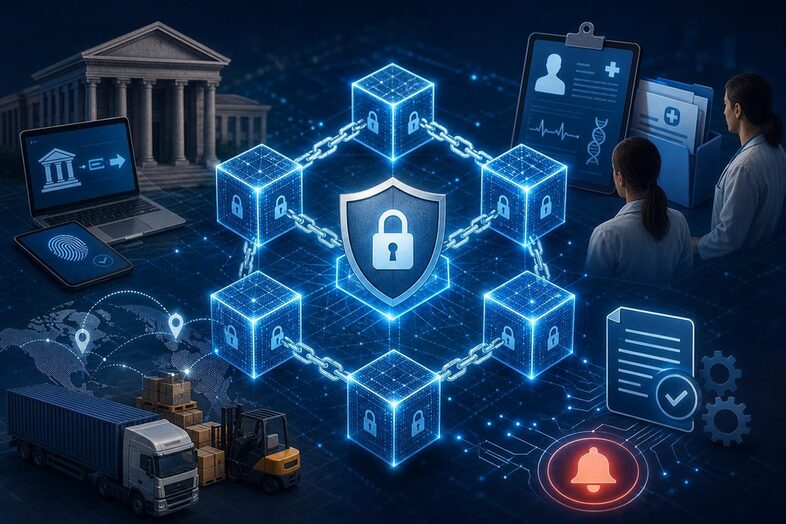
Blockchain is being used to protect data and transactions across financial services, healthcare and supply chains, with its distributed structure intended to reduce reliance on a single central store of information. The technology also offers a way to maintain records that are difficult to alter once added to the ledger.
Those properties are relevant beyond cryptocurrencies such as Bitcoin. The practical case for blockchain in security rests on how it records information, shares records across a network and can automate certain checks through smart contracts. The source material provides no cryptocurrency prices or market figures, so the implications here concern data handling and operational security rather than asset valuations.
Records spread across a network
A blockchain is a form of distributed ledger technology. Instead of keeping a record in one central location, it maintains copies across multiple systems. When a new transaction takes place, its record is added to the ledgers held by participants in the network.
That arrangement is intended to address a weakness associated with centralised storage: a single point of failure. If information is distributed among network nodes, an attacker has no one central store to target in the way they might with a conventional centralised system. The source describes the resulting security risk as considerably reduced, rather than presenting decentralisation as a guarantee that attacks cannot happen.
The design also changes how records are checked. Participants hold copies of the ledger, while each new transaction contributes another entry. This can make the history of activity more transparent to those with access to the network. For organisations handling sensitive information, the potential benefit is a shared record that is harder to tamper with than data held in a single place.
Integrity and access to sensitive data
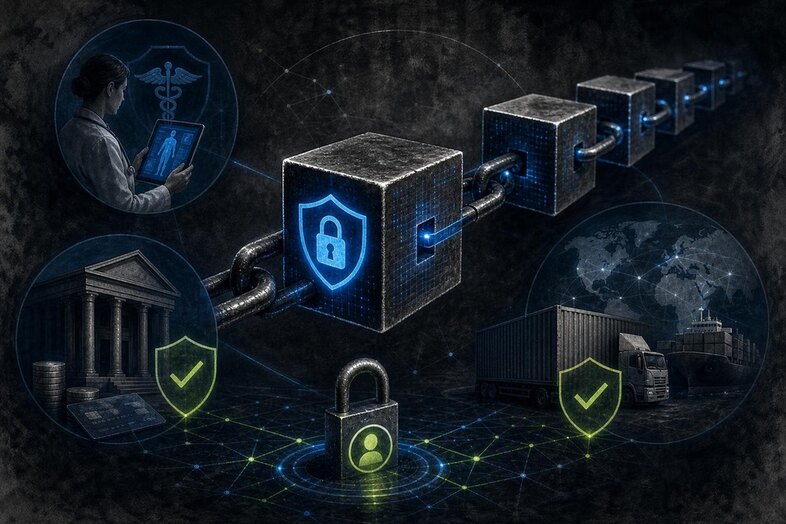
Once a block of data has been recorded, changing it is extremely difficult. This immutability can help protect records against tampering, a particular concern in fields where the accuracy of stored information matters. Financial services, healthcare and government operations are identified as areas where data integrity is critical.
Healthcare provides one example of the proposed use. Medical records can be encrypted and stored on a blockchain, allowing authorised professionals to share information without compromising patient privacy. The practical point is the combination of controlled sharing and a record designed to resist alteration. The material does not specify a particular platform or describe how permissions are administered.
In financial services, banks and other institutions use blockchain to secure payment processing and protect against fraud. For supply chains, the ledger can provide a transparent, tamper-proof record of transactions. That record is intended to reduce the risk of fraud and theft in logistics by making transaction histories harder to change without detection.
Automating security responses
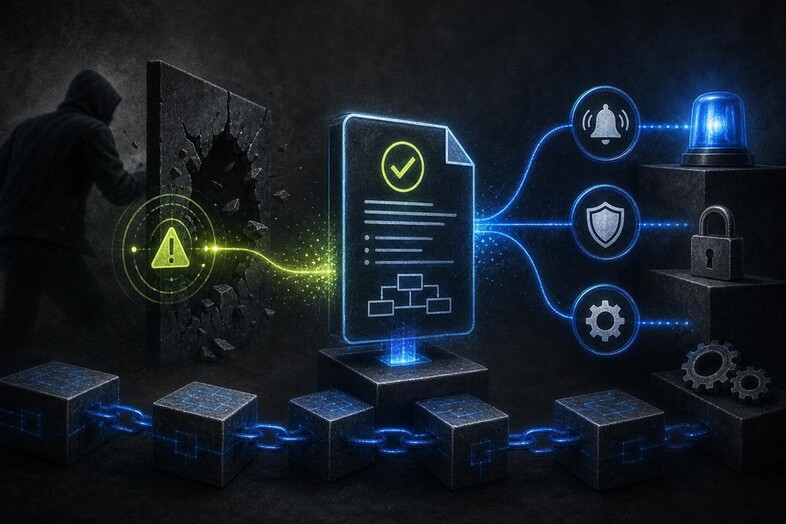
Smart contracts add an automated element. They are agreements whose terms are written into code and which execute without human intervention. A contract can be programmed to enforce and verify those terms, limiting the need for a person to carry out each step manually.
For security teams, the source gives alerts as one possible application. A smart contract could trigger an alert if a system detects an unauthorised access attempt or other suspicious activity. That is a potential use, not a claim that every blockchain deployment already detects threats automatically. The response depends on what the contract is programmed to do and on the system identifying the activity in the first place.
The distinctions matter for organisations assessing the technology. A distributed ledger can reduce dependence on centralised storage; an immutable record can make tampering harder; and a smart contract can automate specified actions. Each addresses a different part of security. None of the examples supplied includes cost data, deployment figures or a comparison with other security systems.
What the applications mean for organisations
The examples point to operational uses rather than a change in the market price of crypto assets. Banks can apply blockchain to payment processing, healthcare providers can share encrypted records with authorised professionals, and supply-chain participants can use transaction histories to track activity. In each case, the stated benefit is improved protection or record integrity.
The technology’s wider role remains tied to how it is implemented. The material says blockchain is developing and could support systems that detect and defend against emerging cyber threats, but it gives no timetable, measured results or named deployments beyond the sector examples. It therefore supports a case for potential use, not a quantified claim about how much risk an organisation can remove.
For companies considering these applications, the clearest practical distinction is between maintaining a shared, hard-to-change record and automating a response to suspicious activity. Blockchain can provide the former through its distributed ledger; smart contracts can be configured for the latter. The examples given cover payment processing, encrypted medical records and supply-chain transaction histories.