BigWater Protocol launches XDC-based climate rewards platform
 Phuong-Linh Nguyen
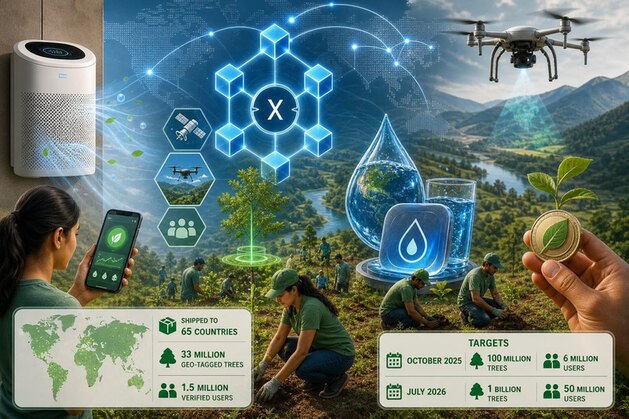
BigWater Protocol has launched a blockchain-based platform that rewards users for contributing environmental data and links air-purification devices with clean-water credits, according to an announcement issued in Dubai on 20 June 2025.
The project combines blockchain, geospatial monitoring and artificial intelligence with community participation. Its stated focus includes afforestation, water access and ecosystem restoration. BigWater says it is built on the XDC Network, an EVM-compatible blockchain, and that users can earn its $BIGW tokens by submitting environmental and tree-growth data.
The announcement does not provide a token price, a market valuation or details of exchange listings. It says $BIGW can be traded on exchanges and redeemed for water, DePIN devices and other platform benefits, but does not name any trading venues or set out how token rewards are calculated.
Purifiers, water credits and monitoring
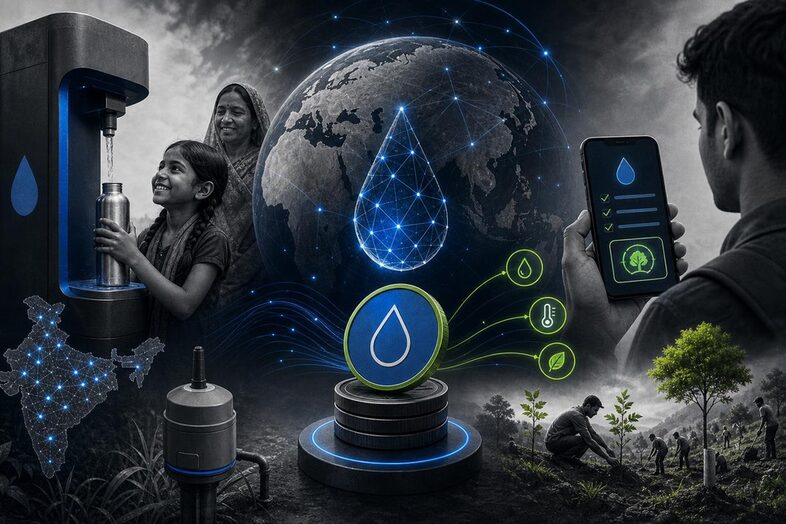
BigWater describes its Smart Air Purifiers as decentralised physical infrastructure network (DePIN) devices. Connected to the project’s mobile app, they monitor indoor air quality and other environmental measures, with users receiving $BIGW tokens in their wallets. The company says each purifier processes about two million litres of air a day and enables the delivery of 1,000 litres of clean water, represented by an NFT-based Water Credit.
The announcement presents the credits as a way to connect device activity to water delivery. It does not give a credit price, explain how recipients redeem credits, or specify how the reported water volumes are independently audited. BigWater says its blockchain records devices, datasets, rewards and impact, and describes its verification approach in terms of Proof of Existence, Proof of Delivery and Proof of Impact.
For plantation and land-management work, the project says it will track geo-tagged sites in real time and use drones and AI to monitor, audit and manage ecosystems. GeoTree, described as a partner platform, is intended to provide ground-truth data, satellite validation and citizen involvement. BigWater also says it will make environmental datasets available to researchers, presenting this as a contribution to decentralised science.
Published user and tree figures
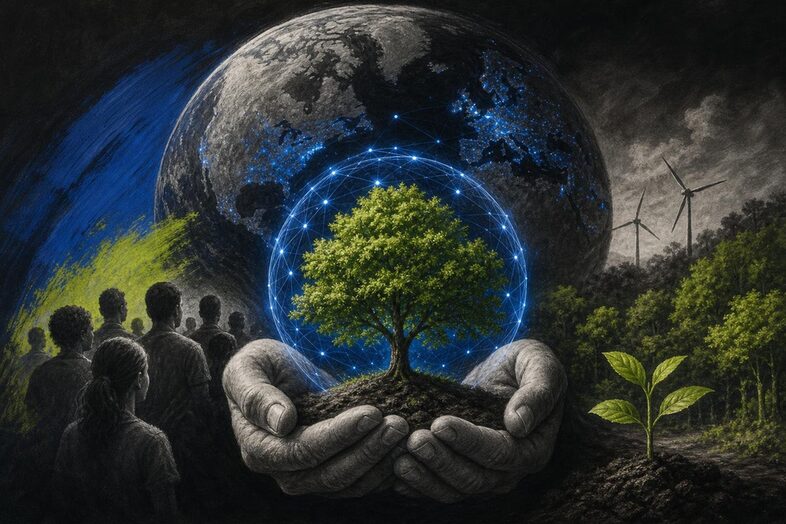
BigWater reported that devices had been shipped to 65 countries, and that 33 million geo-tagged trees and 1.5 million verified users had been onboarded. Those figures appear in the project’s launch announcement; it did not provide a breakdown by country or explain the verification method behind the user total.
The company set targets of 100 million trees and six million users by October 2025, followed by one billion trees and 50 million users by July 2026. These are stated goals, not reported outcomes. The announcement gives no intervening milestones or information on how progress towards them would be independently checked.
BigWater says the initiative supports India’s pledge to reach net zero by 2070, announced by Prime Minister Narendra Modi at COP26, and aligns its work with the Paris Agreement and UN Sustainable Development Goals. It places afforestation at the centre of its approach, while also citing biodiversity conservation and ecosystem restoration under India’s Mission LiFE programme.
Partners and the project’s operating base
The project lists JanaJal-JJSUITE, Geo Planet Solution, Foundership, XDC Network, UP8 Trust, 0xLabs, CueWeb, Orbital Beam and the Global Safe Water Foundation among its partners. BigWater says the US-based Global Safe Water Foundation subsidises DePIN device costs to support access to clean water in emerging countries. The release does not give subsidy amounts or eligibility criteria.
Founder Parag Agarwal’s existing JanaJal operation is presented as the platform’s water-delivery foundation. BigWater attributes to JanaJal more than 200 million litres of clean water dispensed, over 30 million beneficiaries served in urban and rural India, more than two million active subscribers and 109 million single-use plastic bottles eliminated. It also says the organisation collected more than one billion environmental data points over ten years.
Those figures are claims included in the company’s announcement, which does not provide a separate audit or supporting methodology. For crypto users, the practical offer described so far is a token reward for environmental data contributions, alongside device-linked water credits; the release supplies no $BIGW price or exchange names. BigWater’s next stated user and tree targets are six million users and 100 million trees by October 2025.