Compromised Irish police accounts pushed fake XRP allocation
 Phuong-Linh Nguyen
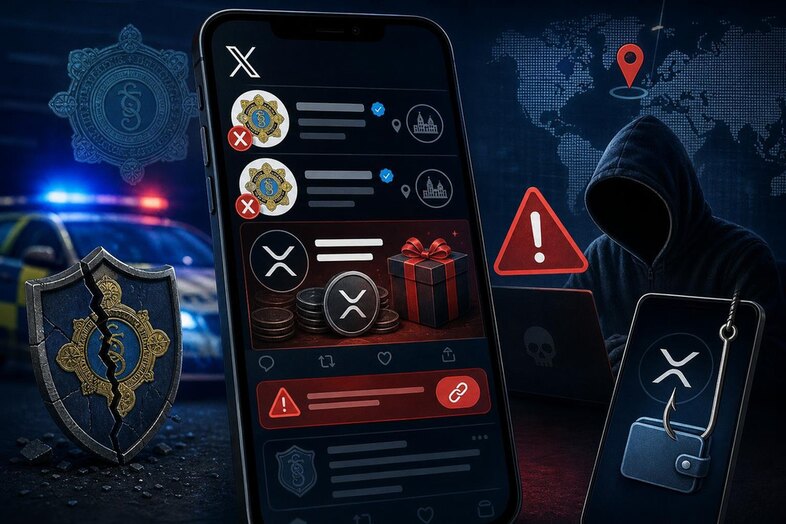
Hackers used two compromised An Garda Síochána accounts on X to promote a fake XRP allocation, turning official-looking social media posts into a route to crypto phishing links.
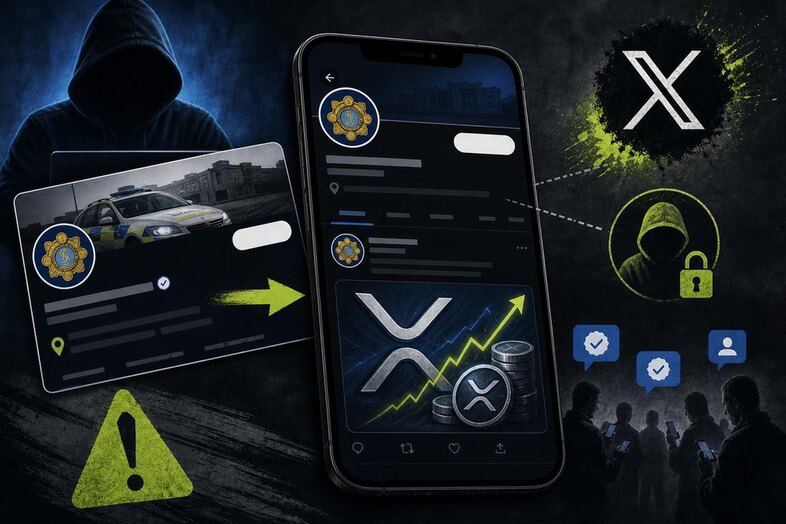
The accounts, @GardaTraffic and @GardaInfo, were accessed without authorisation on 14 October. They had roughly 600,000 and nearly 300,000 followers respectively. The attackers removed their official branding, changed the listed location to Amsterdam and began publishing posts urging users to claim an XRP “allocation”.
Some posts were flagged by X with warnings linking them to a suspended profile. Older, legitimate Garda posts remained further down the accounts’ timelines, while the new cryptocurrency promotions appeared prominently. Thousands of followers saw the malicious posts before the breach was reported.
A social media post is not proof of an offer
The campaign followed a familiar phishing pattern: users were tagged as eligible for an XRP allocation or airdrop and directed towards claim links. The use of police accounts gave the posts an appearance of official endorsement, but the accounts’ established identity and large audiences did not make the promotions genuine.
That distinction matters for anyone considering a crypto transaction. The source reports no XRP price movement or market-wide effect from the incident, and it gives no figures for attempted claims or financial losses. The immediate risk was to users who followed the links, connected a wallet or approved a request presented by a site promoted through the compromised accounts.
Xaman’s documentation says the wallet does not run airdrops, has never done so and will not do so. It also states that claims of an Xaman airdrop, rewards programme or free XRP allocation are fake. A website asking a user to connect a wallet may seek permission to use malicious signature requests or wallet-draining tools to take funds.
For traders, the practical point is that a supposed allocation should not be treated as an opportunity simply because it appears on a verified or widely followed account. A hacked account can retain its audience and, as the Garda incident showed, can be altered to look conspicuously different from its usual identity. Users should check a project’s own website or app rather than relying on links in unsolicited social posts.
Garda says breach was confined to X
An Garda Síochána confirmed the compromise on Thursday morning. The force said unauthorised access was limited to X and that its systems and data had not been accessed. It was working with the platform to establish how the accounts were compromised, while an internal investigation was under way.
The force’s accounts on Facebook and Instagram were not affected. The available information does not identify how the attackers gained access to the two X accounts, so the cause remains under investigation.
The changes to the accounts offered visible warning signs: the removed branding, the switch in listed location and the sudden stream of crypto promotions. Those clues were not enough to prevent users from seeing the posts before the breach was reported. A follower count or verification marker alone cannot establish that a post is safe.
What users should check before connecting a wallet
Anyone encountering an unsolicited allocation or airdrop offer should avoid opening its claim link, connecting a wallet or approving a signature request. Checking the offer directly through the relevant project’s official website or app avoids relying on a social media account that may have been taken over.
The incident did not provide evidence of a change in XRP’s market price. Its direct consequence was the use of two high-reach police accounts to distribute a phishing pitch, with the potential danger arising when users acted on the links. Garda said the breach affected X only; its other social media accounts were not affected.