HMRC sent 81,172 crypto tax warnings to UK holders in 2025/26
 Phuong-Linh Nguyen
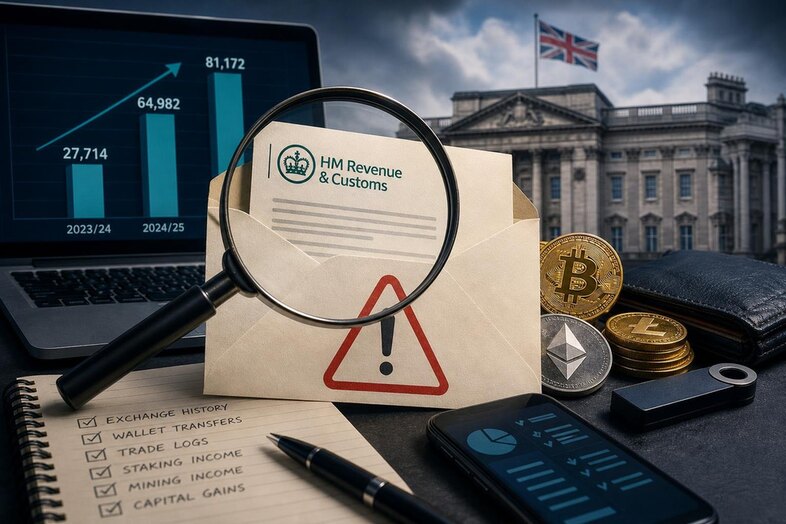
HM Revenue & Customs sent 81,172 warning letters, emails and text messages to UK cryptocurrency holders during the 2025/26 tax year, according to official Freedom of Information data cited in a report by CoinTracking. The total was 25% higher than in 2024/25 and almost three times the number recorded two tax years earlier.
HMRC issued 64,982 notices in 2024/25, up from 27,714 in 2023/24. The latest figure marks a further increase in the tax authority’s use of automated data matching to identify possible differences between crypto activity and taxpayers’ Self Assessment returns.
What a warning letter means
HMRC’s communications are often called “nudge letters” or “One to Many” letters. They are prompts for taxpayers to check whether their records and tax returns are complete. A letter does not, by itself, mean that HMRC has opened a formal tax audit or started a criminal investigation.
The notices can follow a mismatch between information HMRC obtains from UK-based digital asset exchanges and figures reported on a Self Assessment return. The source says trading volumes or wallet transfers recorded by an exchange may be compared with the taxpayer’s submitted figures. If the information does not appear to align, HMRC may send a warning asking the recipient to review their position.
That makes record-keeping a practical concern for anyone who has used multiple exchanges or moved assets between wallets. An exchange-by-exchange history, alongside records of transfers, can help a taxpayer check what activity was reported and identify any missing information. The source provides no cryptocurrency price data, so the increase in notices should not be read as evidence of a change in market prices or trading volumes across the whole UK market.

Data reporting expands from 2026
The warning-letter figures reflect HMRC’s existing sources of information. A wider reporting system is also being introduced under the Crypto-Asset Reporting Framework, or CARF.
The UK’s Reporting Cryptoasset Service Providers Regulations 2025 came into force on 1 January 2026. Under the framework, UK-based crypto exchanges, custodians and other service providers began collecting detailed user-identification and transaction records. Their first annual reports to HMRC are due by 31 May 2027 and will cover transactions carried out during 2026.
From 2027, HMRC is also due to exchange this information automatically with participating tax authorities in other countries. The stated effect is to make activity on international platforms more visible to UK tax authorities. For taxpayers, activity spread across different services may therefore need to be considered alongside UK exchange records when checking a return.
Steps after receiving a notice
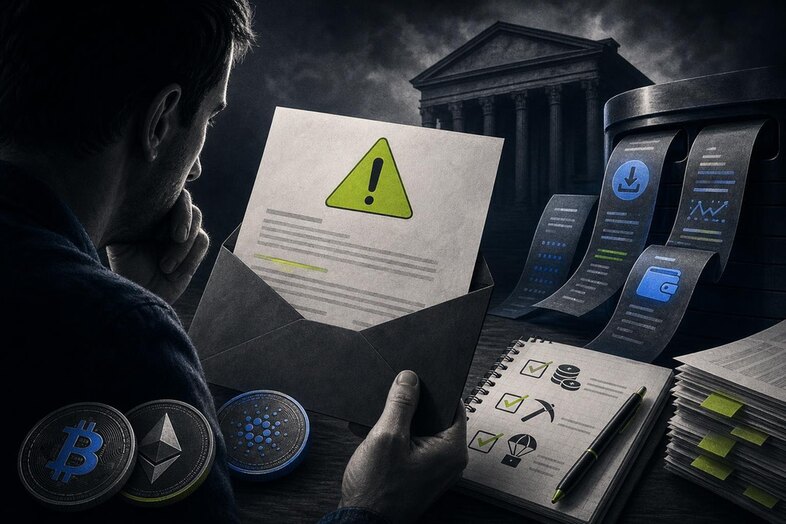
The source advises recipients not to ignore a warning. Notices contain response deadlines, and failing to respond may lead HMRC to escalate the matter to a formal tax enquiry. The deadline will depend on the notice received; the source does not specify a standard period.
Taxpayers are advised to collect transaction logs, trade histories and wallet-transfer records from every platform they have used, then review whether their returns account for relevant capital gains or income. The source highlights staking and mining as activities that may trigger Income Tax, and says taxpayers should check whether their net capital gains exceed the annual Capital Gains Tax allowance. It does not provide an allowance amount.
If that review identifies unpaid tax, the source recommends using HMRC’s voluntary disclosure facility. It says voluntary reporting generally results in lower penalties than waiting for a formal enquiry, but gives no penalty rates or case-specific outcome. The figures behind the latest warning total are 81,172 notices in 2025/26, against 64,982 in the previous tax year.