S&P keeps Tether’s USDT at lowest stablecoin stability rating
 Phuong-Linh Nguyen
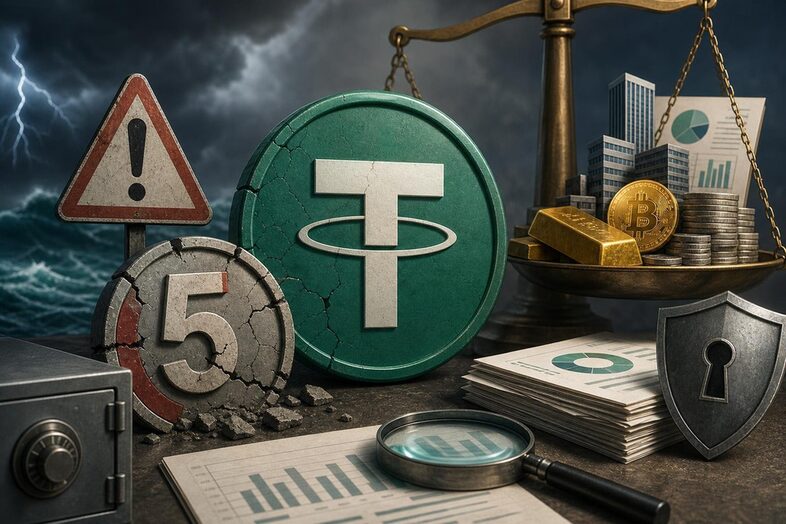
S&P Global Ratings has kept Tether’s USDT at 5, the lowest level on its stablecoin stability scale, citing a rising share of higher-risk assets in the token’s reserves. The rating measures the agency’s view of USDT’s ability to maintain its US dollar peg; it does not report a change in the token’s market price.
In a report published on 18 November, S&P described the peg’s stability as “weak”. The assessment is unchanged from November 2025, despite the agency identifying further weaknesses in its review.
Gold, Bitcoin, listed shares, secured loans and corporate bonds together accounted for 28% of USDT in circulation on 30 September. That was up from 24% a year earlier. S&P warned that a substantial fall in the value of those holdings could leave the token inadequately backed.
The figures put the composition of Tether’s reserves at the centre of the rating discussion. A larger allocation to assets that can lose value, the agency said, could reduce the coverage available against tokens in circulation if those assets fell sharply. S&P did not lower its score further, saying its scale could not assign a rating below 5.
Tether disputes S&P’s approach
Tether rejected the basis of the assessment, telling Cointelegraph that the problem lay with S&P’s framework rather than with its reserves. The company also invoked the film “The Big Short”, which depicts the 2008 financial crisis, in its criticism of the agency.
Tether’s reserve report for 30 September, attested to by BDO, listed about $191.5 billion in assets against $183.5 billion in liabilities. The resulting excess assets were approximately $7.95 billion. Those figures describe the reported balance between assets and liabilities; S&P’s concerns also cover the risks, accessibility and oversight of the assets backing USDT.
Questions over liquidity and protection of reserves
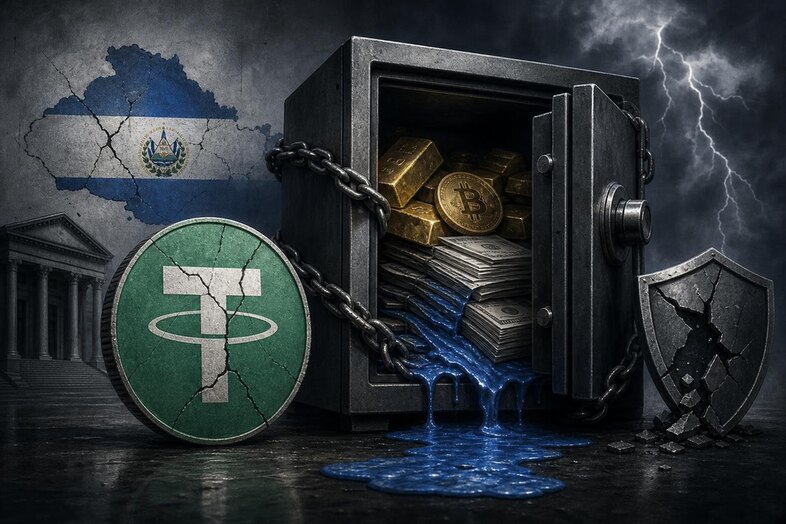
S&P highlighted El Salvador’s regulatory requirements after Tether moved its headquarters there in January 2025. The country’s National Commission for Digital Assets, or CNAD, requires 70% of reserves to be held in assets that can be liquidated within 30 days, according to the report.
The agency said the rule was broad enough to include assets it regards as relatively risky, including gold, Bitcoin and loans. The requirement therefore focuses on the time needed to liquidate holdings, while S&P’s assessment also considers the potential for their value to fall.
The report also pointed to the absence of a requirement to segregate reserve assets, unlike rules imposed by regulators in the US and Europe. S&P said there was no publicly available information showing whether such separation existed, leaving it unable to assess how far the reserves were shielded from wider corporate risks.
Audit details and reporting frequency remain in focus
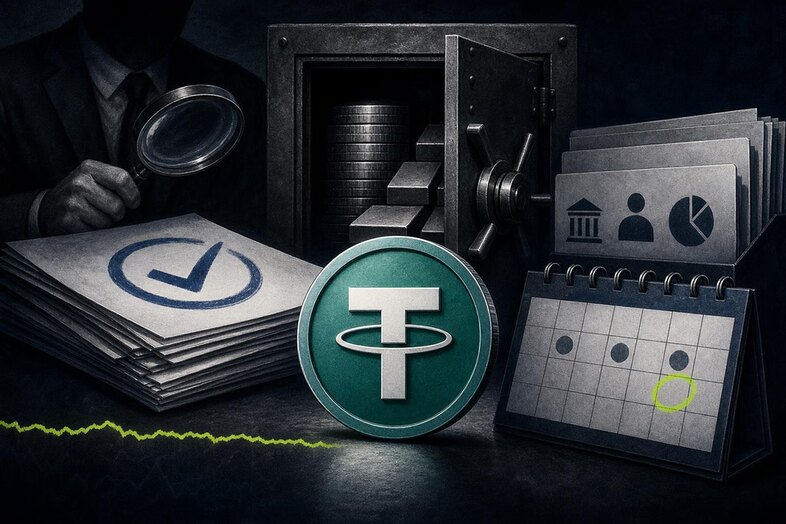
In August 2026, KPMG confirmed that it had issued an unqualified audit opinion on Tether’s 2025 financial statements. Tether described this as its first full independent audit and said the work confirmed the financial reports it had published.
S&P said the audited statements and the auditor’s report had not been made public, limiting its ability to verify the underlying information. It also said Tether’s reserve reports did not identify the custodians or counterparties holding the assets. The reports are issued quarterly, while other stablecoins generally provide monthly updates, according to S&P.
Despite retaining the lowest rating, S&P acknowledged that USDT had maintained a good record of price stability, particularly over the previous 12 months. The rating remains at 5, while the reported reserve figures show approximately $7.95 billion in excess assets as of 30 September.