Ripple built XRP for cross-border payments as SEC scrutiny put its market standing under pressure
 Phuong-Linh Nguyen
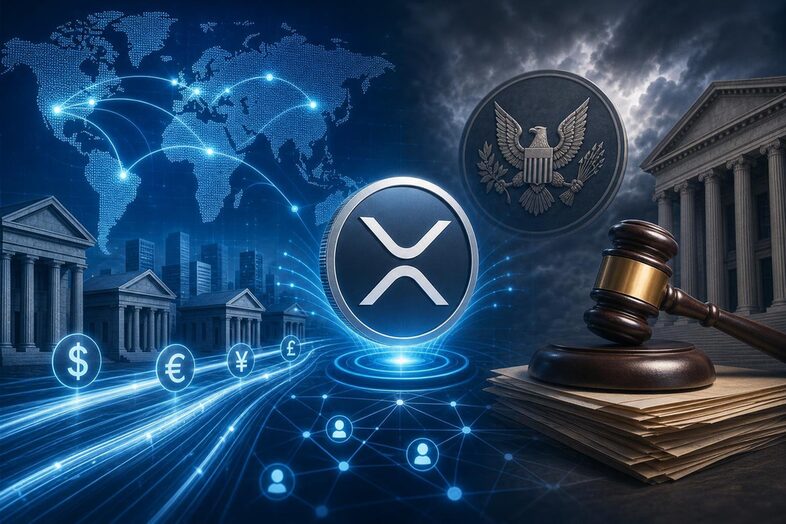
Ripple designed XRP to support international payments, while a US securities lawsuit filed in December 2020 brought regulatory scrutiny to the asset and affected its value and position in the cryptocurrency market.
The history of Ripple centres on two related but distinct elements: the company’s payment network and XRP, the digital asset used on it. Ripple was founded in 2012 by Chris Larsen and Jed McCaleb through Ripple Labs Inc. Its stated focus differed from that of cryptocurrencies designed around direct peer-to-peer transactions. Ripple instead set out to work with banks and payment providers on cross-border transfers.
That institutional focus shaped the network’s transaction model. Ripple uses a consensus ledger to validate account balances and transactions, rather than mining. The protocol’s consensus process distinguishes it from Bitcoin and other cryptocurrencies that rely on mining, and the absence of mining is presented as reducing the network’s environmental impact and energy use.
The design has a practical aim: support transfers between different currencies without making the network dependent on a single fiat or crypto asset. XRP serves as a bridge currency on the Ripple network. Its role is to connect currencies for international transactions, making it part of the payment system rather than simply a token whose use is separate from the network.
That distinction matters when assessing Ripple’s commercial proposition. The company developed its technology for financial institutions, while XRP is the asset that can facilitate movement between currencies. The stated goal is to make cross-border payments faster and more cost-effective. The available account does not provide transaction times, fees or a comparison with particular payment systems, so it does not quantify those benefits.
Some established financial names have tested Ripple’s technology. American Express and Santander are among the institutions cited as having experimented with it to improve their cross-border payment offerings. That points to interest from parts of the banking sector, but experimentation should not be read as evidence that every institution adopted the network or that those trials resulted in a specific level of payment activity.
The most consequential regulatory event described was the US Securities and Exchange Commission’s lawsuit against Ripple Labs in December 2020. The SEC alleged that XRP was a security and that its sale breached federal securities laws. Those were allegations in the case, not a conclusion established by the information available here. The dispute placed the classification of XRP and the company’s sales under regulatory scrutiny.
The case also had a market effect. XRP’s value and standing in the crypto market were affected by the litigation, even as it remained among the leading cryptocurrencies by market capitalisation. No price, percentage move or market-capitalisation figure is given, so the scale of that impact cannot be stated. For traders and investors, the practical point in this account is that legal scrutiny formed part of XRP’s market history, alongside the payment technology behind it.
Ripple has also benefited from an active community, with forums, social media discussions and annual gatherings described as supporting engagement around the network. The source links that community activity to efforts to advance the technology and address regulatory issues, but gives no membership figures or measures of its influence.
Ripple’s payment-led approach, consensus ledger and use of XRP as a bridge asset set out a different proposition from mining-based cryptocurrencies. Its partnerships and trials provided evidence of institutional interest, while the SEC’s December 2020 filing introduced a legal risk with a reported effect on XRP’s value and market standing. The account supplies no current XRP quote or quantified price change.