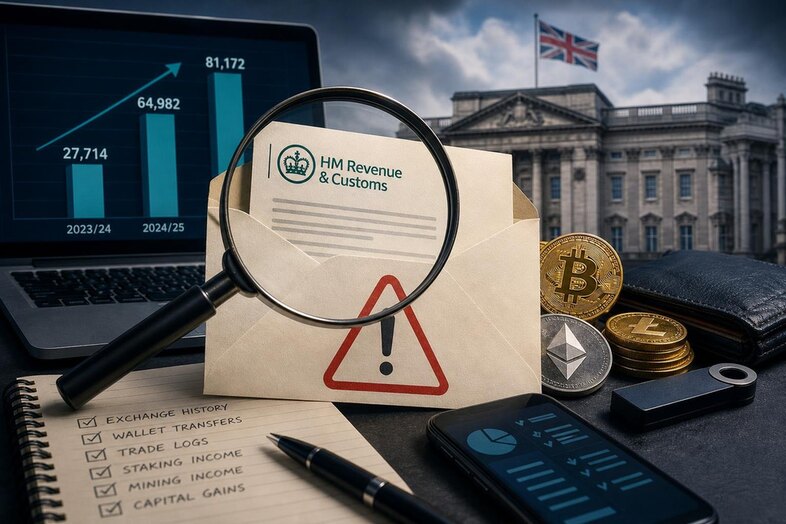
HMRC targets crypto tax discrepancies as CARF reporting prepares to begin
 Phuong-Linh Nguyen

HMRC is contacting UK crypto holders whose exchange records appear inconsistent with their Self Assessment returns, as the tax authority prepares to receive transaction data directly from platforms under the Cryptoasset Reporting Framework (CARF).
Figures published on 27 August 2026 show that 17,600 people reported a combined £1.38 billion in taxable cryptocurrency gains for the 2024/25 tax year. HMRC is now pursuing a wider “nudge letter” campaign aimed at people whose recorded exchange activity does not match what they declared. The letters are intended to prompt taxpayers to check their position; they are not, by themselves, formal audits or investigations.
Why exchange activity can create a tax bill
For most UK retail investors, crypto gains fall under Capital Gains Tax (CGT). A disposal can include selling tokens for cash, giving them to someone other than a spouse, using them to pay for goods or services, or exchanging one cryptocurrency for another. A Bitcoin-to-Ethereum swap, for example, can trigger a CGT event even when the holder has not converted the proceeds into pounds.
That distinction matters when reviewing transaction histories. The absence of a cash withdrawal does not establish that no taxable disposal took place. A holder may have made multiple exchanges between assets, and those transactions need to be considered alongside purchases and other disposals when calculating gains. HMRC’s letters indicate that the records available to the authority do not reconcile with a recipient’s submitted return, but some people who receive one may ultimately find they owe no additional tax.
For the 2026/27 tax year, the annual exempt amount for capital gains is £3,000. Gains above that allowance are taxed at 18% for basic-rate taxpayers and 24% for higher-rate taxpayers, according to the source. Before October 2024, the respective rates were 10% and 20%. The figures make the year to which a gain relates relevant when taxpayers review past activity.

CARF adds direct platform reporting
The current nudge campaign uses transaction information to identify potential mismatches. CARF is due to apply in the UK from 1 January 2026 and will require UK-based cryptoasset service providers, including exchanges and custodian wallets, to verify and collect users’ identities. The information listed includes names, dates of birth, addresses and National Insurance numbers.
Platforms will also have to report transaction volumes and proceeds to HMRC. The first major bulk transfer is scheduled for 1 January to 31 May 2027 and will cover transactions made during the 2026 calendar year. That reporting timetable is distinct from the present campaign, which is examining earlier tax returns and available exchange records.
HMRC estimates that CARF could recover up to £315 million in unpaid tax by April 2030. The estimate relates to the framework’s expected tax recovery; it does not establish what any individual recipient of a nudge letter owes. For taxpayers, the practical change is that platform data will be supplied to HMRC, while the taxpayer remains responsible for calculating the taxable gain rather than treating reported proceeds as profit.
Reconstructing a position and making a disclosure
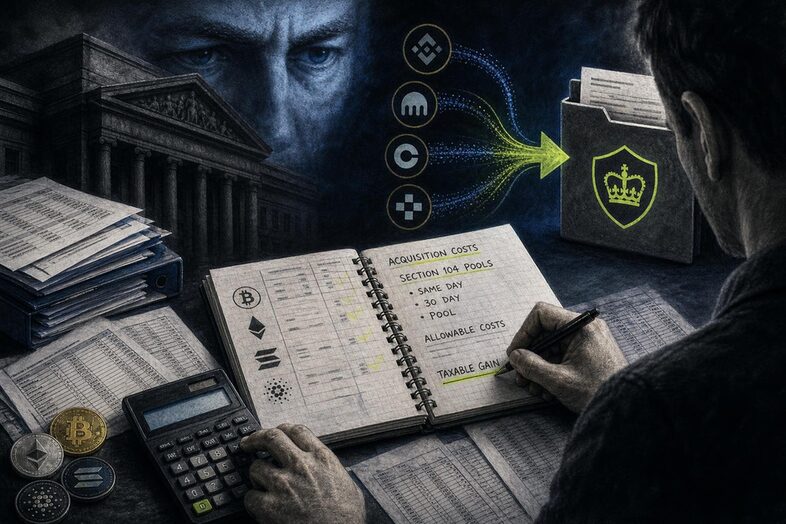
Investors who receive a letter are advised to assemble records from every exchange they have used, including accounts that have since been closed, before confirming their tax position. HMRC’s transaction information may show gross proceeds, but proceeds alone do not calculate the net gain. The investor must work out acquisition costs, including the relevant Section 104 pools, to establish the actual gain.
The source advises against signing a certificate of tax position before establishing the figures. Where tax remains unpaid, taxpayers can use HMRC’s online cryptoasset disclosure service. A disclosure made after a nudge letter has arrived counts as “prompted”, and carries higher penalties than an unprompted voluntary disclosure. Late payment interest is also charged at HMRC’s stated rate of 7.75%.
For people checking a past return, the immediate task is therefore to reconcile exchange transactions with acquisition costs and reportable disposals, rather than relying solely on cash withdrawals or a platform’s headline proceeds figure. CARF’s first scheduled bulk reporting window runs from 1 January to 31 May 2027, covering 2026 transactions.